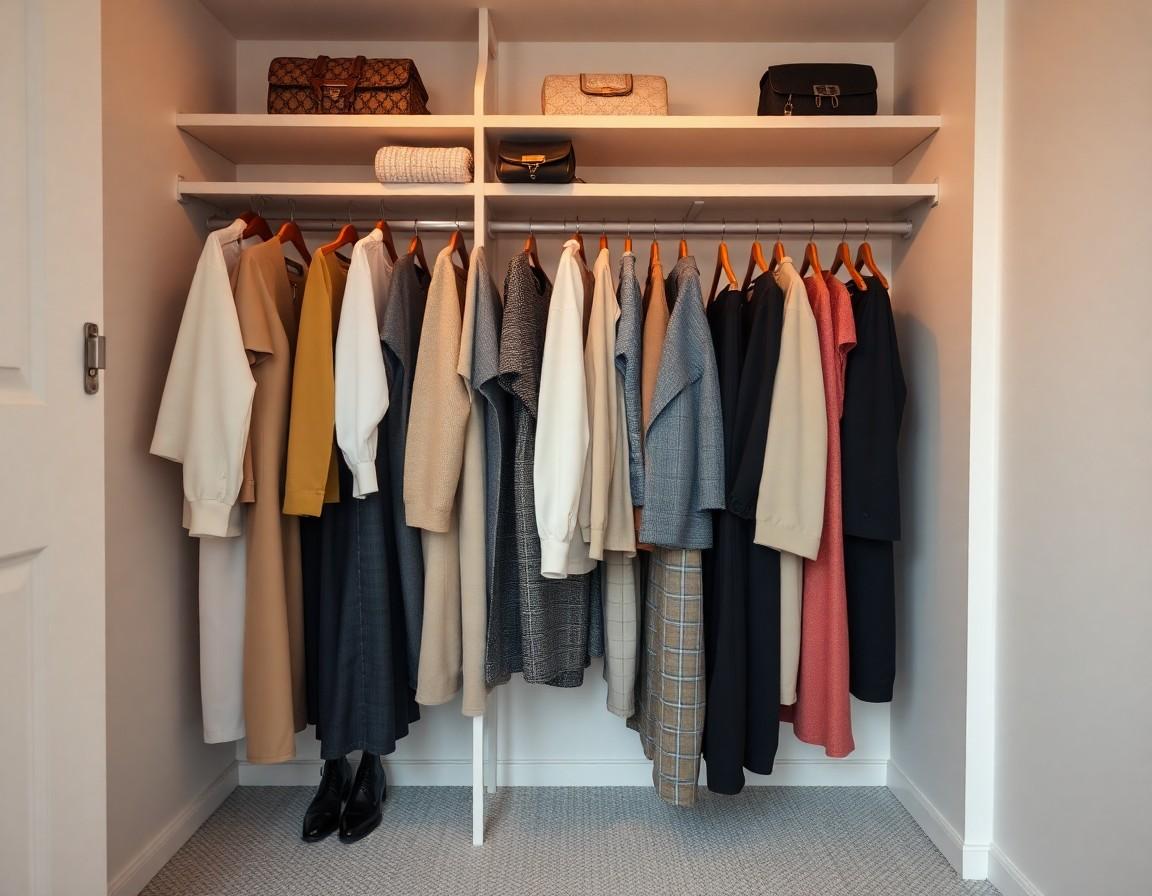
You're standing in front of a closet that's genuinely full. Shirts you bought, dresses you loved in the store, that jacket you swore you'd wear constantly. And yet the thought lands anyway: I have nothing to wear.It's one of the most universal frustrations in getting dressed, and it has almost nothing to do with how many clothes you own. It's about how your brain handles too many options, too early in the morning.
A full closet isn't a clothes problem
If you can't put an outfit together, the instinct is to assume you need more— another top, the right pair of shoes, one missing piece that ties it all together. Sometimes that's true. Far more often, the clothes that would solve the problem are already hanging right in front of you. You just can't see them as outfits. The gap is between owning pieces and knowing how they combine, and no amount of new shopping closes that gap.
Decision fatigue is the real culprit
Getting dressed is a string of small decisions, and you make it at the worst possible time — early, rushed, before coffee has fully kicked in. With twenty tops and fifteen bottoms, the number of possible combinations runs into the hundreds. Your brain can't evaluate that many options, so it does what brains do under load: it defaults. You reach for the same three or four reliable outfits and quietly ignore the rest of the closet. That's why a wardrobe of fifty pieces can feel like a wardrobe of six.
It compounds, too. Every time you fall back on a safe outfit you reinforce the habit, and the forgotten pieces drift further out of view. A few weeks later you can't even remember why you bought them. The fix isn't willpower or a 6 a.m. burst of creativity — it's moving the decision somewhere your brain has the bandwidth to make it well.
The forgotten middle of your wardrobe
Most closets split into three zones. There's the heavy rotation — the pieces you wear weekly without thinking. There's the dead weight — things that genuinely don't fit or suit you, which you should probably let go. And in between sits the largest zone: perfectly good clothes that you simply forgot pair well with something. A blouse that would look great with the trousers two hangers over. A sweater that's only ever been worn one way but works with three different bottoms. This forgotten middle is where “nothing to wear” actually lives — and where outfit planning pays off most.
What “AI outfit planning” really means
Strip away the buzzwords and outfit planning is a simple idea: take the pieces you already own and surface the combinations worth wearing, so you're choosing between a handful of good options instead of drowning in hundreds. AI helps with the two steps that are hardest to do in your head — generatingthe combinations you'd never think to try, and previewing them so you can judge a look without physically changing five times. Instead of guessing whether the green shirt works with the camel trousers, you see it.
Previewing beats imagining
Here's the part most people underestimate: imagining an outfit is genuinely hard. Holding two garments up next to each other tells you about color, but almost nothing about proportion, length, or how the whole thing reads together. Seeing a combination — actually visualized, ideally on a body — does the work your imagination can't. Suddenly the pairing you assumed was “too much” looks balanced, or the safe combo you reach for every week reveals itself as a little flat. Visual feedback is what turns a closet of separate pieces into a set of real outfits.
It also short-circuits the second-guessing. When you can see a look rather than picture it, you decide faster and you trust the decision more — which is the whole point of planning ahead. The outfits you preview and like become a small, dependable shortlist, and that shortlist is what you reach for on the mornings when you have no patience to think.
A practical way to plan
You don't need an app to start — a quieter, more deliberate approach goes a long way. The goal is to do the thinking once, when you're calm, instead of every frantic morning.
- Anchor on what you wear most. Pick a favorite piece and ask which forgotten items could pair with it.
- Build a few complete looks in advance — head to toe, including the bits you usually improvise badly under pressure.
- Mix one safe element with one experiment so a new combination still feels wearable.
- Save the outfits that worksomewhere you'll actually see them, so the choice is made before you open the closet.
- Rotate deliberately, pulling from the forgotten middle instead of defaulting to the same three.
Where TRYSHOP fits in
This is exactly the friction TRYSHOP is built to remove. You can preview combinations on your own photo, see how pieces actually look together instead of guessing, and save the outfits you love so they're ready when you need them. It won't tell you whether a size fits — try-on is a visualization, not a tailor — but for the real daily question of what goes with what, seeing it beats imagining it every time. The clothes that solve “nothing to wear” are usually already yours; the trick is making them visible.