Some outfits just work. You see someone walk by, register “that looks good,” and move on without ever clocking why. Most of the time the answer isn't a rare designer piece — it's a formula. A reliable combination of shapes and colors that has been quietly working for decades. Learn a handful of these and getting dressed stops being a gamble. You stop staring at a full closet wondering what goes with what, because you already know.
Below are five formulas that hold up across body types, budgets, and seasons. None of them are complicated. The real trick is the last step in each one: actually checking the look on you before you commit, because a formula that flatters one person can fall flat on the next.
1. The monochrome column
Dressing head to toe in a single color — or a tight family of one shade — is the closest thing fashion has to a cheat code. An unbroken column of color, say charcoal on charcoal or cream on cream, draws the eye in a long vertical line, which reads as taller and more put-together with almost no effort. It also removes the hardest decision in getting dressed: whether your pieces clash. When everything is the same tone, nothing can.
To keep monochrome from looking like a uniform, lean on texture. Pair a chunky knit with smooth trousers, or a matte top with a slightly sheeny jacket in the same color. The shades don't have to match perfectly either — a few steps of light-to-dark within one color (tonal dressing) often looks richer than a flat single block.
2. Denim plus a crisp shirt
This is the formula that survives every trend cycle because it sits at the exact midpoint between casual and considered. Well-fitting jeans give you ease; a crisp button-down shirt gives you structure. Together they land somewhere you can wear almost anywhere — a relaxed office, dinner, a weekend that might turn into something.
The variables worth playing with are the shirt color and the denim wash. A white shirt with mid-blue jeans is the cleanest, most classic version. Swap in a pale blue or a soft stripe and it warms up; go to black jeans and a white shirt and it sharpens. Tuck the shirt in for a defined waist, or leave it loose and roll the sleeves for something more off-duty.
3. Blazer, tee, and jeans
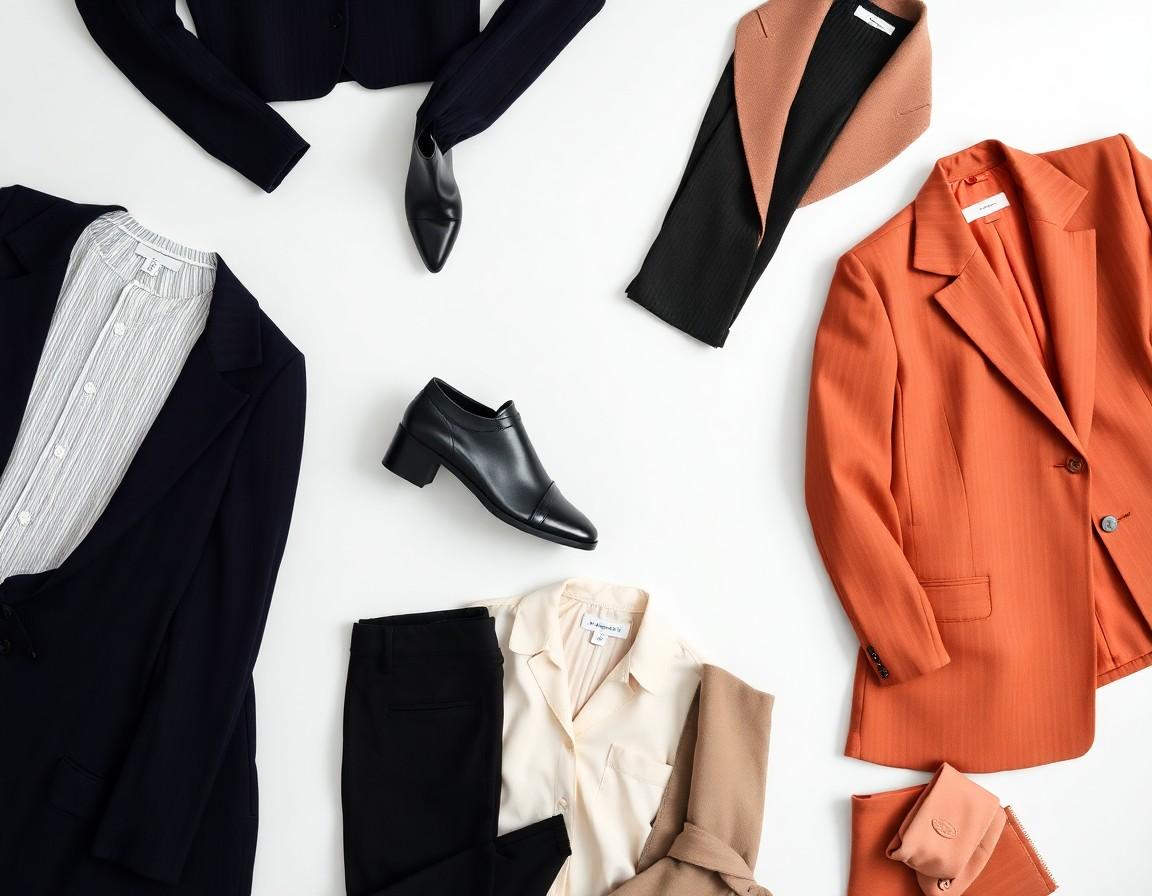
If there's one combination to memorize, it's this one. A structured blazer over a plain T-shirt and good jeans is the backbone of “smart casual” — dressed up enough to look intentional, relaxed enough that you're comfortable all day. The blazer does the heavy lifting: it adds shoulders, a clean line, and instant polish to two pieces that would otherwise read as basic.
The whole look lives or dies on fit. A blazer that's too big swamps you; one that's too tight pulls at the button. The tee should be plain and well-cut, not stretched out, and the jeans should be your most flattering pair. Get those three right and you can wear this combination weekly without it ever feeling repetitive — change the blazer color or the shoes and it's a new outfit.
4. A dress with a jacket on top
A dress already solves the “what goes with what” problem — it's a complete outfit in one piece. Adding a jacket on top is how you bend that one piece to fit the occasion. The same dress reads very differently depending on what you layer over it, which makes this one of the most versatile formulas you can own.
- Dress + leather jacket takes something pretty and gives it an edge — great for evenings.
- Dress + blazer instantly makes a casual dress meeting-ready.
- Dress + denim jacket is the easy, daytime version — relaxed and unfussy.
- Dress + long coat turns a summer dress into a cold-weather look without buying anything new.
One dress, four jackets, four genuinely different outfits. This is the kind of multiplication that makes a small wardrobe feel large.
5. A neutral base plus one bold piece
When you want to look interesting without the risk of an outfit fighting with itself, build on neutrals and add a single statement. Keep most of the look quiet — black, white, grey, navy, beige — then let one piece do all the talking. A bright coat, a patterned skirt, a saturated knit, a striking bag. Because everything else is calm, the bold piece gets to shine instead of competing.
The rule of thumb is one loud thing at a time. Two bold pieces can absolutely work, but it takes a careful eye; one is foolproof. This formula is also the safest way to experiment with color or pattern, since the neutral base keeps everything anchored even if the statement piece is a swing.
Why you still have to test them on yourself
Here's the honest part: a formula tells you a combination is structurally sound, not that it suits you. The monochrome column that lengthens one person can read flat on another. A bold red that lights up your face might drain someone else's. Proportion matters too — where a blazer hits, how high jeans sit, how long a dress falls all change how a formula lands on your specific frame. Formulas narrow the field from “everything” to “a few good options,” but the final call is always personal.
The old way to test was the fitting room: haul an armful of options into a cubicle, wrestle in and out of each, and judge under unkind lighting. It works, but it's slow, and it doesn't help at all when you're shopping online and the only model is somebody who isn't you.
Try each formula on your own photo
This is where a virtual try-on tool earns its place. With TRYSHOP you can preview clothes from top brands on a photo of yourself, which makes it easy to run each formula before you buy. Want to see whether the monochrome column actually elongates your frame, or which jacket flatters that dress, or whether a bold red sits well against your skin tone? Build the look on your own photo and judge it in seconds.
Keep your expectations honest: try-on is a helpful visualization, not a perfect measurement tool, so you'll still want the brand's size guide for fit. But for the question these formulas can't answer on their own — “does this work on me?” — seeing it on yourself first beats guessing every time.