You've probably read the advice a hundred times: if you're this shape, wear that; if you're that shape, avoid this. The internet is full of charts that sort everyone into fruit and letters and promise that following the rules will make you look your best. But here's the honest truth — those rules are a starting point at most, and for a lot of people they're just noise. The only test that really matters is seeing a piece of clothing on you.
Why body-type rules fall short
Shape charts try to compress an enormous amount of human variety into a handful of categories. Real bodies don't cooperate. Two people described by the same label can have completely different heights, proportions, posture, and — crucially — completely different taste. A rule that “works” on paper can look and feel wrong in practice, and a so-called mistake can be the most flattering thing you own. Treating these guidelines as laws tends to shrink your wardrobe and your confidence rather than expand them.
There's a quieter problem with them too. Body-type rules often carry an unspoken message that some shapes need “fixing” — that the goal of getting dressed is to hide or correct rather than to enjoy. That framing rarely helps anyone feel good. A far kinder and more practical approach is to assume there's nothing to fix in the first place, and simply find the clothes that you like seeing on yourself.
What “flattering” actually means
Strip away the jargon and “flattering” usually comes down to a few neutral ideas: proportion, balance, and how a fabric falls. A hem that hits at a good spot for your legs, a waistline that sits where you want the eye to land, a fabric that drapes instead of clinging where you'd rather it didn't. None of this is tied to a shape label — it's about how a specific garment relates to your specific frame. And the only reliable way to judge that is to look, not to consult a chart.
Silhouette over labels
Instead of asking “what's my body type?”, a more useful question is “what silhouette do I want today?” A silhouette is just the overall outline an outfit creates — fitted up top and loose below, relaxed all over, structured and tailored, flowing and soft. The same person can pull off many different silhouettes depending on the occasion and their mood. Thinking in silhouettes frees you from a fixed identity and lets you dress for how you actually want to feel.
It also makes shopping more playful. Once you stop asking whether something is “allowed” for your shape and start asking whether you like the outline it creates, a lot more of the wardrobe opens up. Some days you might want a sharp, tailored line; other days something soft and easy. Both can be right, and neither needs permission from a chart.
A few things worth paying attention to
None of these are rules — they're just details that change how an outfit reads, and ones you can check for yourself when you see a look on your own body:
- Where hems land. A skirt or trouser length that hits a flattering point on your leg can completely change the proportions of an outfit.
- Where the waist sits. High, mid, or low — the waistline draws the eye and shifts how the rest of the look balances.
- How the fabric moves. Stiff and structured reads very differently from soft and draping, even in the same color and cut.
- The balance top to bottom.Volume in one place often looks best paired with something leaner in another — but “best” is whatever you like when you see it.
The real test is seeing it on you
Here's where every chart and every well-meaning tip runs out of road. A model is not you. A mannequin is not you. Even a friend with great taste can only guess at how something will sit on your frame. The moment you actually see a garment on your own body, all the abstract advice collapses into a single clear answer: yes, that's the one— or no, not quite. That visual confirmation is worth more than any number of rules, because it accounts for everything the rules can't.
How virtual try-on removes the guesswork
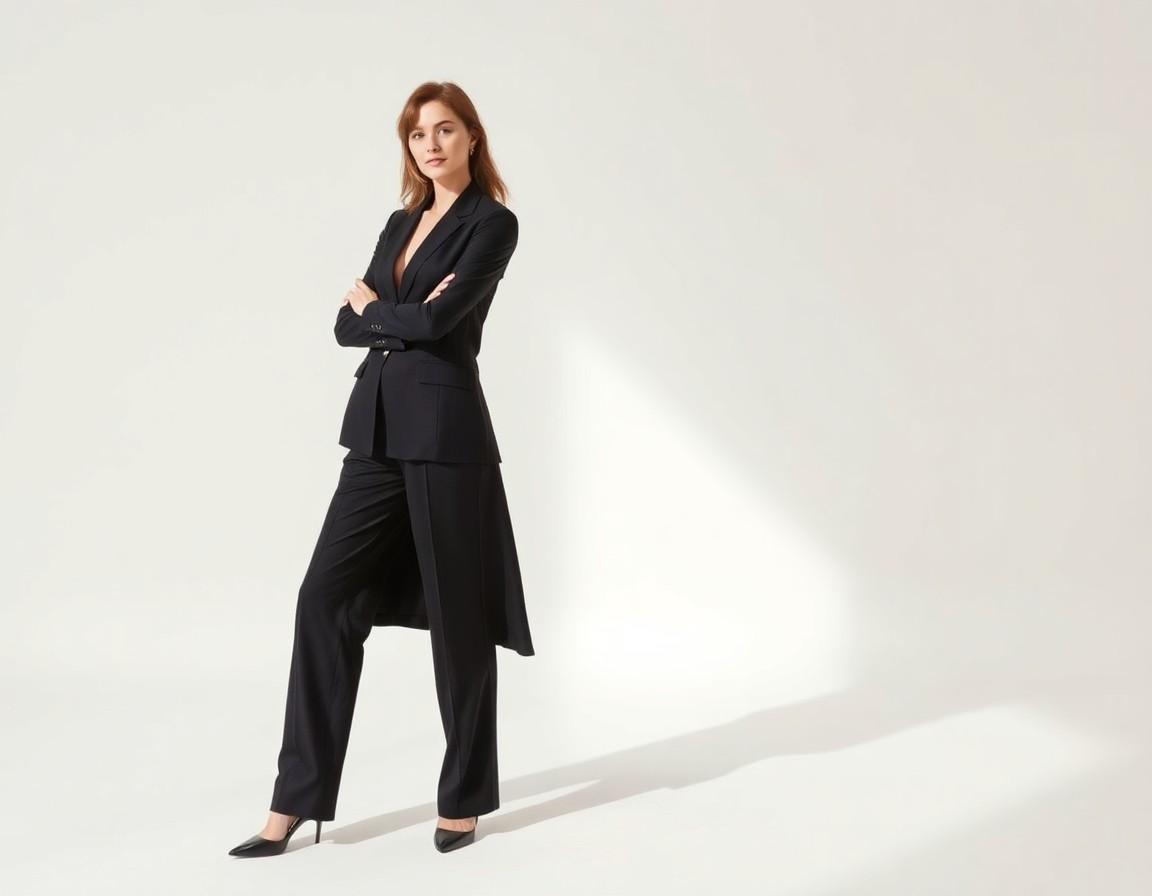
This is exactly the gap virtual try-on is built to close. Instead of imagining how a silhouette might work on you, you can preview it on a photo of yourself and judge with your own eyes. Want to see whether a longline coat balances your proportions, or whether a cropped jacket feels right? You can compare them side by side in seconds, without ordering a thing. It turns “I think this might suit me” into “I can see that it does.”
One honest caveat: try-on is a visualization tool, not a measurement tool. It shows you how a silhouette and color look on you, but it won't tell you whether a size medium will actually fit — for that, you still want the brand's size guide. Used for what it's good at, though, it's the closest thing to a fitting room you can carry in your pocket, and it lets you be far more adventurous than you'd ever be in a store.
Dress for the body you have today
The healthiest way to shop is to stop dressing for a category and start dressing for yourself — the body you have, the mood you're in, the look you want. Rules can spark ideas, but they should never override what you see in front of you. TRYSHOP makes that easy: browse pieces from top brands, preview any of them on your own photo, and keep the silhouettes that genuinely feel like you. The guesswork disappears, and what's left is just the fun part — finding clothes you love.