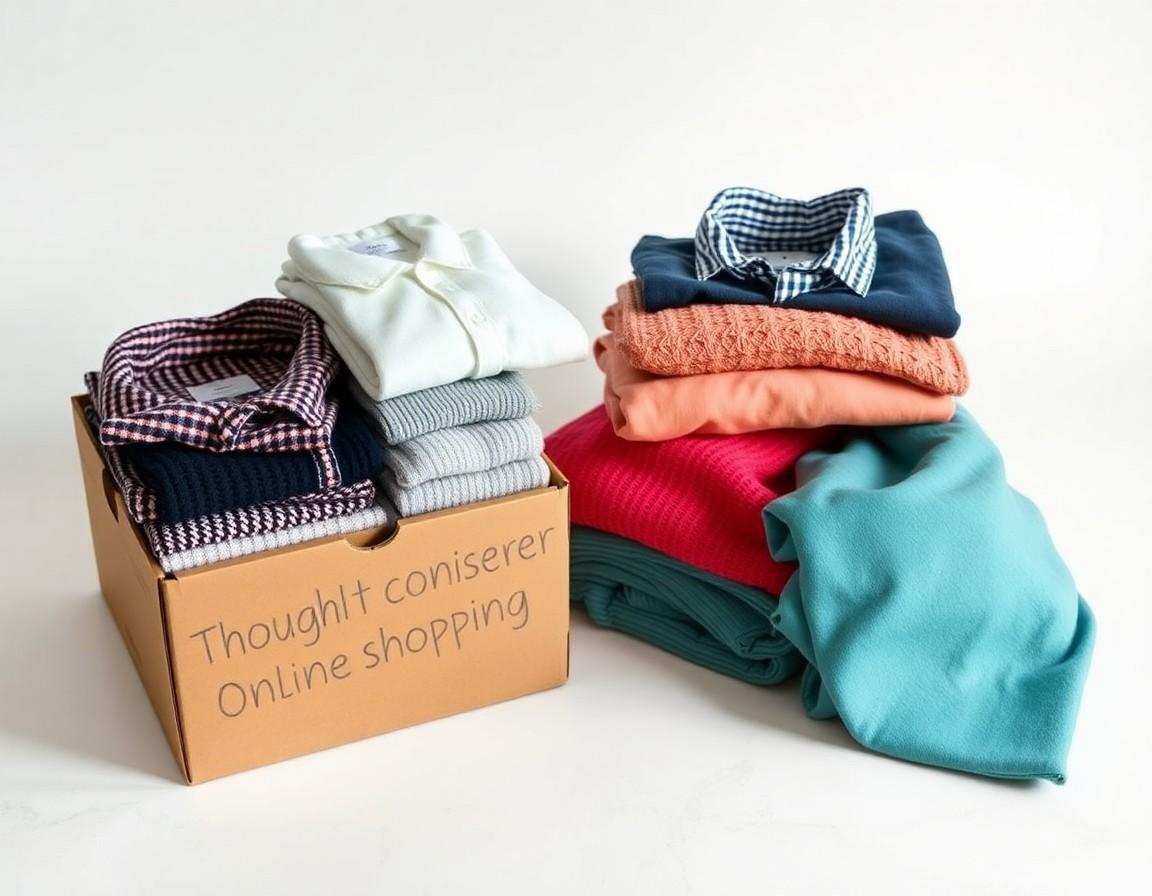
Returning clothes online feels like the closest thing to a risk-free purchase. Order three sizes, keep one, send the rest back, pay nothing. That's the promise on the product page — but it's only the part of the story you can see. Behind every free returns label there's a real bill, and it lands on your time, your money, and the planet. Here's what it actually costs, and why buying right the first time is the cheapest move of all.
“Free returns” is a marketing line, not a fact
Nothing about a return is free — the word just describes who pays at the checkout, not whether a cost exists. Picking, packing, shipping, receiving, inspecting, repackaging, and restocking a garment all cost money and labour. When the shipping label is prepaid, the retailer absorbs that cost up front and then quietly folds it back into prices, so it ends up spread across everyone who shops there. “Free” is the easiest word in retail; it almost never means no one paid.
The cost you pay in time
The most underrated price of a return is your own time. Think through the full loop: you wait days for the parcel, try the item on, decide it's wrong, find the right box, repackage it, print or scan a label, and make a trip to a drop-off point or wait in for a courier. Then you wait again — often a week or two — for the refund to clear. None of those minutes show up on a receipt, but they add up across a year of shopping into hours you'll never get back.
The fees hiding in plain sight
The financial cost is creeping back toward shoppers, too. A growing number of retailers now charge a return fee, deduct the original outbound shipping from your refund, or quietly tighten their windows. Even when the return itself is genuinely free, your money is locked up between the moment you pay and the moment you're refunded. Buy-now-pay-later makes this worse: a repayment can fall due before the refund for a returned item arrives, leaving you chasing your own money.
The environmental footprint
This is where the real bill sits. A returned garment doesn't simply teleport back to the shelf. It travels — often hundreds of miles — back to a warehouse or a third-party processor, burning fuel and adding emissions on top of the original delivery. Then it has to be inspected, and that's where things get genuinely wasteful.
Because labour and logistics often cost more than a single item is worth, a meaningful share of returned clothing never makes it back into circulation. Some is discounted into outlet channels, some is sent to liquidators, and some — by the retailers' own admission in various reports — is destroyed or sent to landfill because reselling it isn't profitable. A perfectly wearable garment can end up as waste simply because the maths didn't work. Add the extra packaging, the plastic mailers, and the return transport, and a single “free” return can carry a surprisingly heavy carbon and waste cost.
Why bracketing makes it worse
One habit drives a lot of this: bracketing — ordering the same item in several sizes or colours intending to keep one and return the rest. It feels sensible when sizing is unreliable, but it multiplies every cost above. Each extra item in the bracket is another parcel shipped, another return processed, and another candidate for the landfill pile. The kinder fix isn't to stop shopping; it's to make a confident choice the first time so you don't need a safety net of spares.
Buying right the first time helps everyone
Almost every return traces back to the same root cause: a decision made with too little information. The photo was a flattering best-case, the size was a guess, or the colour fought your skin tone in a way the studio shot never revealed. Closing that information gap before checkout is the single most effective thing you can do. It saves your time, keeps your money free, and quietly cuts the shipping and waste that come with every box sent back. A few habits make a real difference:
- Use the size guide, not the size.Compare the brand's actual measurements against a garment you already own and love, rather than trusting that your usual letter is the same everywhere.
- Read reviews for fit notes.Search for “runs small,” “true to size,” and comments from people with a similar build.
- Resist the urge to bracket. Pick one size you genuinely believe will fit instead of ordering a safety net of spares.
- Picture it on you, not the model. Ask whether the colour, length, and cut actually suit your frame — not just whether it looked good on someone else.
- Sleep on the impulse buys. A short pause turns a midnight cart into a deliberate choice and kills the regret returns before they happen.
Where a try-on preview fits in
The hardest gap to close is the last one — knowing how something will look on youbefore it arrives. That's exactly where virtual try-on helps. TRYSHOP lets you preview clothes from top brands on a photo of yourself, so you can judge the colour, length, and silhouette against your own frame before you spend a cent. It won't measure your shoulders, and you should still check the size guide — try-on is a visualization, not a perfect fit test — but it answers the “will this suit me?” question that drives so many returns. Fewer surprises at the door means fewer boxes heading back out of it.
The bottom line
Returns will always exist, and you shouldn't feel guilty about sending back something that genuinely doesn't work. But every return you can avoid is a win on three fronts at once — your time, your money, and a planet that pays for the shipping and the waste. The goal isn't to buy less of what you love. It's to buy it with enough confidence that it stays in your wardrobe instead of making a round trip back to the warehouse.