Business formal is the most conservative professional dress code — the standard for law, finance, executive meetings, and high-stakes presentations. It's the corporate equivalent of putting on your most polished, authoritative self: tailored suiting, refined fabrics, and a restrained palette, with every detail considered.
Below is what business formal requires and a set of looks that meet the bar, whether you wear a suit, a tailored dress, or separates.
Decode the dress code
Business formal is suiting-level professional. Here's the standard.
- A matched suit in a dark, neutral color — navy, charcoal, black, or grey — is the backbone.
- Crisp shirts and blouses, closed-toe polished shoes, and minimal, refined accessories.
- Tailored dresses and skirt-suits work, kept knee-length and conservative.
- Keep colors muted and patterns subtle; the message is competence and authority, not flair.
Suiting
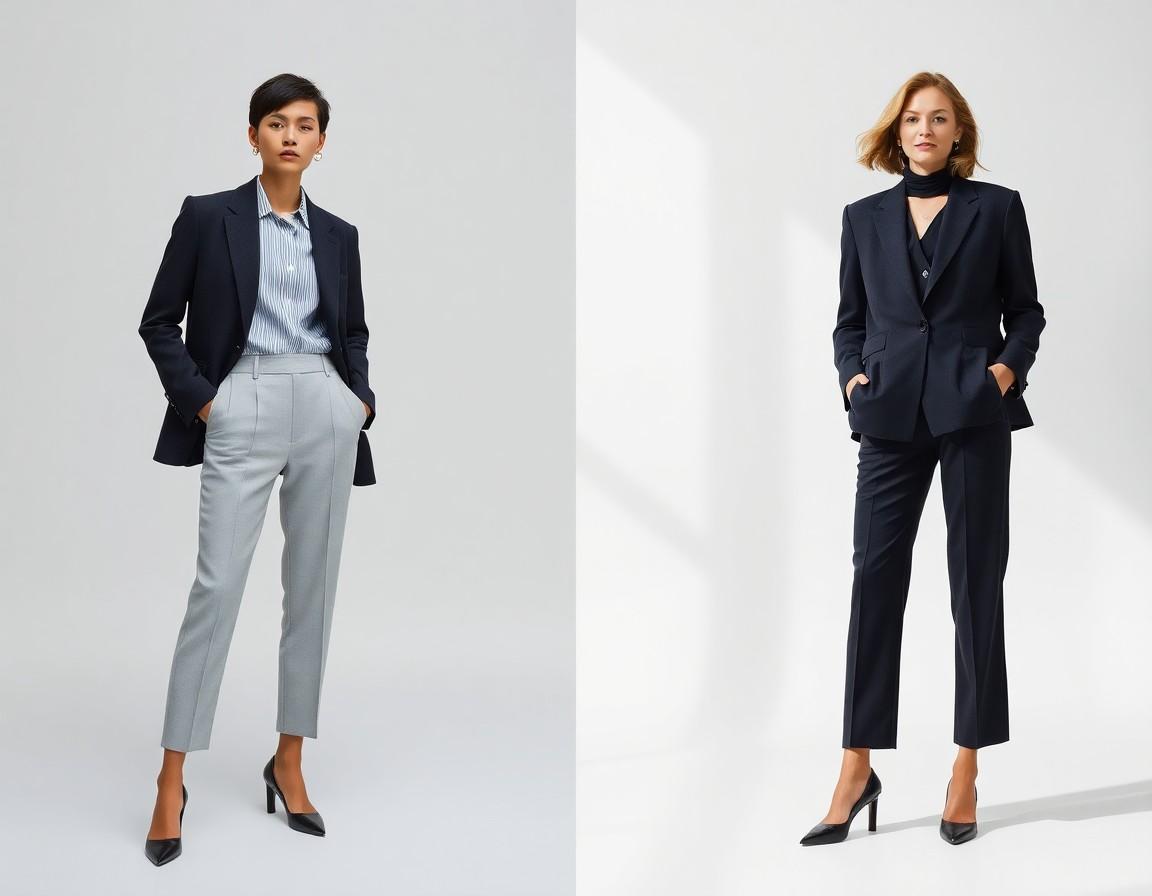
The matched suit
- A tailored matched suit in navy, charcoal, or grey
- A crisp white or pale shirt or shell
- Polished closed-toe shoes — oxfords or low pumps
The textbook business-formal look. Impeccable fit and quality fabric matter more than anything flashy.
Dresses & separates
The tailored dress + blazer
- A knee-length sheath dress in a dark solid
- A matching or coordinating blazer
- Closed-toe low heels and refined jewelry
A sheath dress under a structured blazer reads fully business formal and is easy to move and present in.
The skirt suit
- A tailored knee-length skirt with a matching jacket
- A silk shell or crisp blouse
- Closed-toe heels
A classic, authoritative option for conservative industries; keep the hemline at the knee and the palette muted.
Quick do's and don'ts
- Invest in fit and fabric — business formal is unforgiving of poorly tailored or cheap-looking pieces.
- Stick to a dark, muted palette: navy, charcoal, black, grey, with crisp white or pale shirts.
- Closed-toe, polished shoes only; open toes and casual footwear undercut the formality.
- Keep accessories minimal and refined — a watch, simple earrings, nothing loud.
- Iron and lint-roll before you leave; at this level, wrinkles and stray threads stand out.
- Conservative is the goal — when choosing between two options, pick the more restrained one.
Business formal outfit FAQs
What is business formal attire?
Business formal is the most conservative professional dress code, standard in law, finance, and executive settings. It calls for a matched suit in a dark neutral, crisp shirts or blouses, closed-toe polished shoes, and minimal refined accessories. Tailored knee-length dresses and skirt-suits also qualify. The goal is authority and competence, so keep colors muted and details impeccable.
What's the difference between business formal and business casual?
Business formal requires a matched suit and the most polished, conservative presentation — it's the corporate dress-up code. Business casual relaxes that: tailored trousers or skirts with blouses, knits, and blazers, but no suit-and-tie requirement. Business formal is what you wear to a high-stakes meeting; business casual is the everyday office standard in many workplaces.
Can women wear pants for business formal?
Yes — a tailored pantsuit in a dark neutral is fully business formal and a strong, authoritative choice. Skirt-suits and knee-length tailored dresses under a blazer are equally appropriate. The key across all of them is sharp tailoring, refined fabric, a muted palette, and closed-toe polished shoes.