An interview outfit has one job: to make you look like you already belong, so the conversation can be about your work and not your clothes. The reliable rule is to dress one notch more formal than the company's everyday code — polished enough to signal you take it seriously, never so stiff you look out of place.
Below are interview looks sorted by the kind of workplace you're walking into, plus the grooming-and-fit details that quietly do a lot of the work.
Decode the dress code
Match the industry, then go one level up. Here's how to read the room before you walk in.
- Corporate / finance / law: business formal — a tailored suit, even if their day-to-day is business casual.
- Business-casual office: tailored trousers or a skirt with a blazer or a refined knit; no tie required.
- Creative / agency: smart-casual with personality — keep it sharp, let one piece show taste.
- Startup / tech: clean smart-casual — dark jeans can work, but pair them with a blazer or a crisp shirt.
- When unsure, default up: it's easier to remove a blazer than to wish you'd worn one.
Corporate & formal roles
The tailored suit
- A well-fitted suit in navy, charcoal, or grey
- A crisp white or light-blue shirt or shell
- Polished leather shoes — oxfords, loafers, or low pumps
For finance, law, and corporate roles, a tailored suit is the safe and expected choice. Fit beats brand — get the shoulders and trouser break right.
Business-casual & office roles
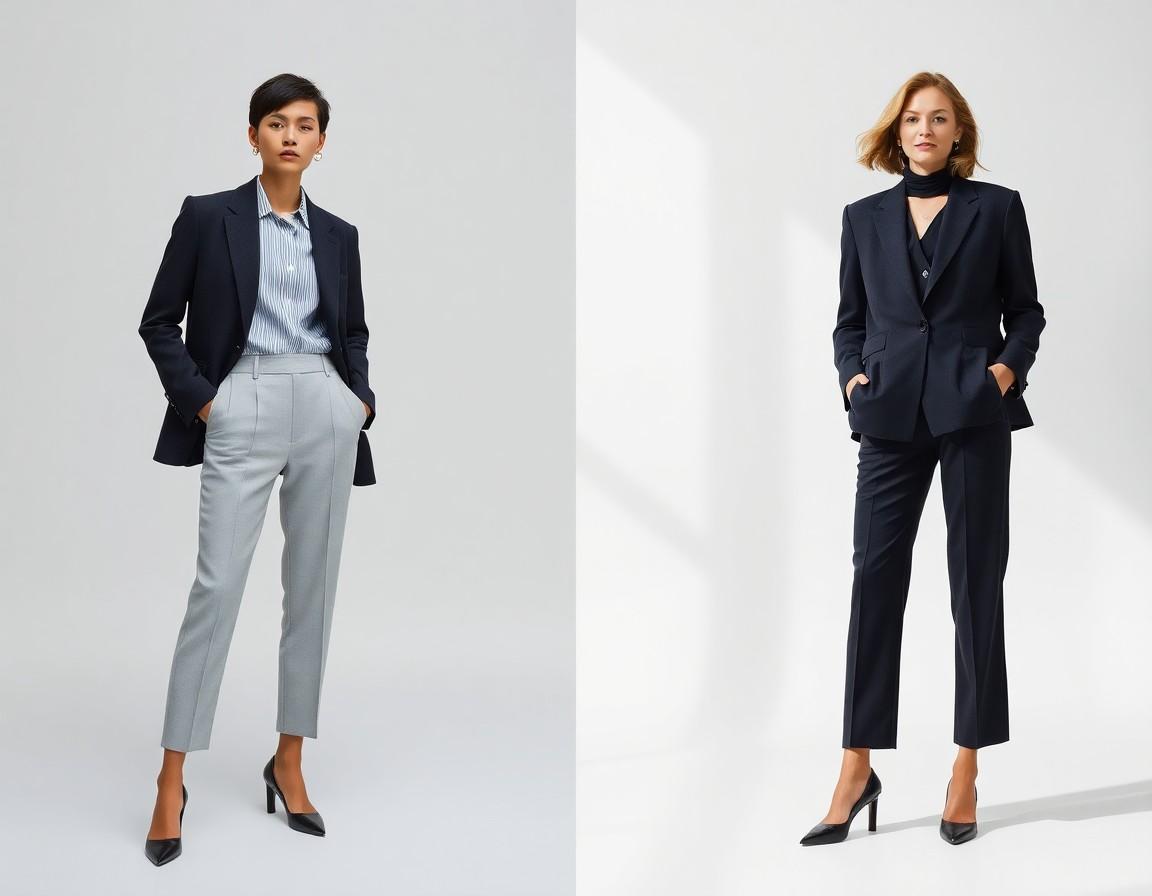
The blazer-and-trousers
- Tailored trousers or a knee-length skirt with a blazer
- A fine knit or a tucked blouse / button-down
- Loafers, low heels, or clean leather flats
A blazer instantly lifts any outfit to interview-ready. This pairing reads professional without the full-suit formality.
Creative, startup & tech roles
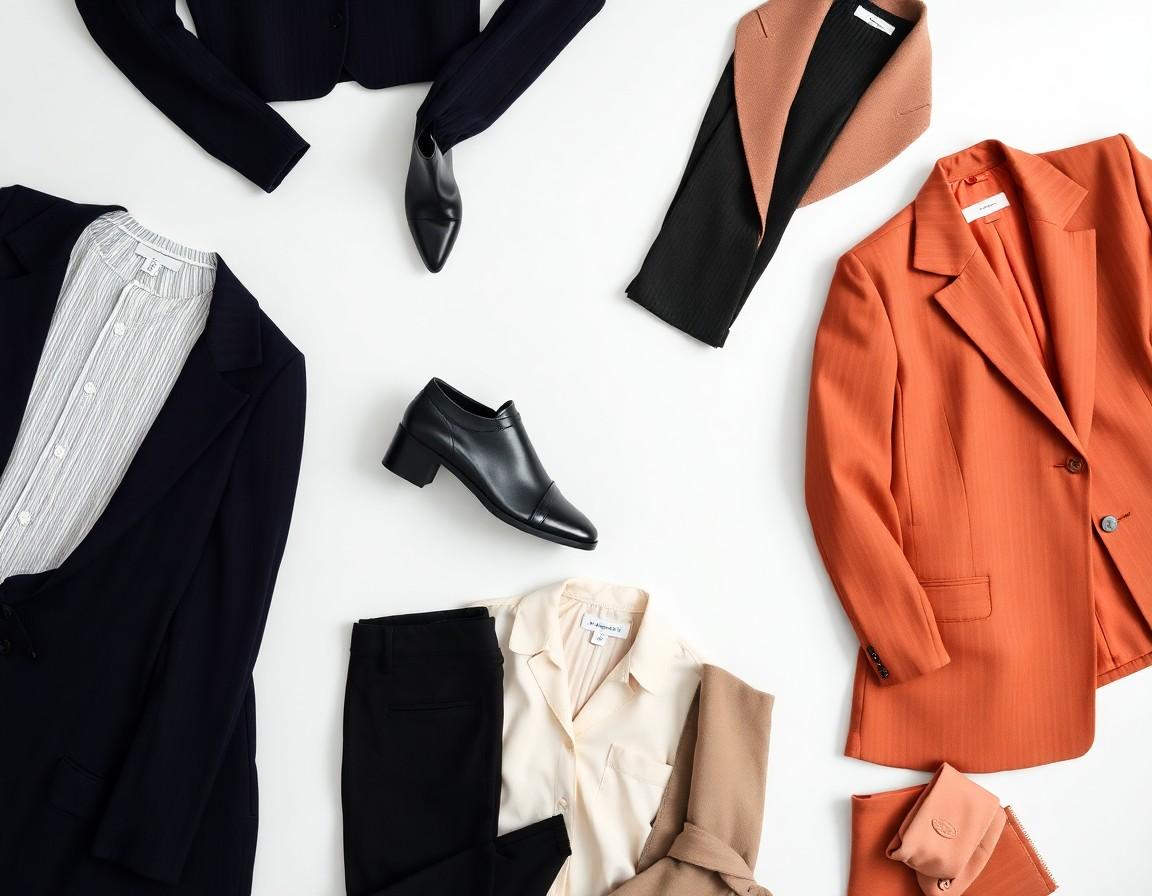
The smart-casual edit
- Dark, clean trousers or well-fitting dark jeans with a blazer
- A crisp shirt, a fine knit, or a polished top
- Minimal leather sneakers, loafers, or ankle boots
Show you understand the culture without dressing down too far. A blazer over dark denim threads the needle for most startups and agencies.
Quick do's and don'ts
- Dress one notch above the company's everyday code — overdressed reads as serious, underdressed reads as careless.
- Fit is the whole game: a well-tailored mid-range outfit beats an ill-fitting expensive one every time.
- Keep colors muted and patterns subtle so the interviewer remembers you, not your shirt.
- Iron everything and check shoes, hems, and nails the night before — small details register.
- Research the company's photos or LinkedIn to gauge the real dress culture, then dress slightly above it.
- Comfort matters — if you're tugging at a waistband or wobbling in new heels, it shows.
Job interview outfit FAQs
What should I wear to a job interview?
Dress one notch more formal than the company's everyday code. For corporate or finance roles, wear a tailored suit; for a business-casual office, trousers or a skirt with a blazer; for creative or startup roles, smart-casual with a blazer over dark trousers or clean dark jeans. Keep colors muted, fit sharp, and details neat so the focus stays on you.
Can I wear jeans to a job interview?
Only for clearly casual workplaces like some startups, creative agencies, or tech companies — and even then, choose dark, clean, well-fitting jeans and pair them with a blazer or a crisp shirt to keep it interview-ready. For corporate, finance, law, or any formal industry, skip denim and wear tailored trousers or a suit.
Is it better to be overdressed or underdressed for an interview?
Overdressed, almost always. Showing up slightly more polished than necessary signals that you take the opportunity seriously, while underdressing can read as careless. If you genuinely can't gauge the culture, default up — it's easy to remove a blazer or tie, and far harder to add the formality you didn't bring.
What colors are best for an interview outfit?
Muted, professional colors — navy, charcoal, grey, and white — project competence and let your words do the talking. Navy in particular reads as trustworthy and approachable. You can add a small, subtle pop through an accessory, but keep loud patterns and bright shades to a minimum so you're remembered for the conversation.